Seeking Solutions Amid Crisis Through the 2026 Korea–U.S. Economic Trends and Outlook
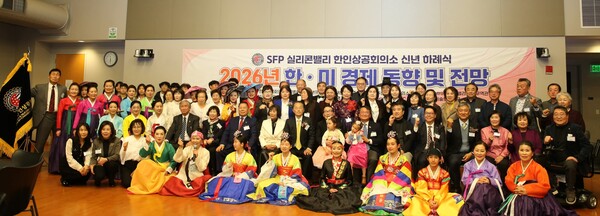
Silicon Valley Korean American business leaders gathered in one place to exchange New Year’s greetings and spend meaningful time exploring response strategies amid rapidly changing economic conditions.
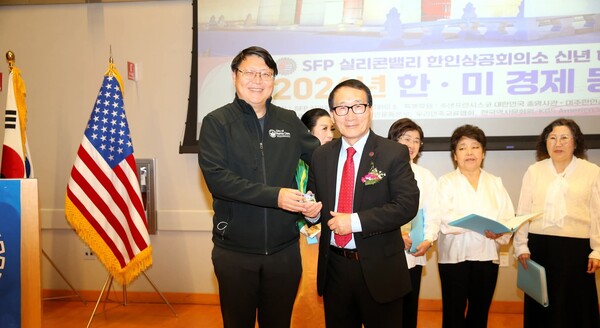
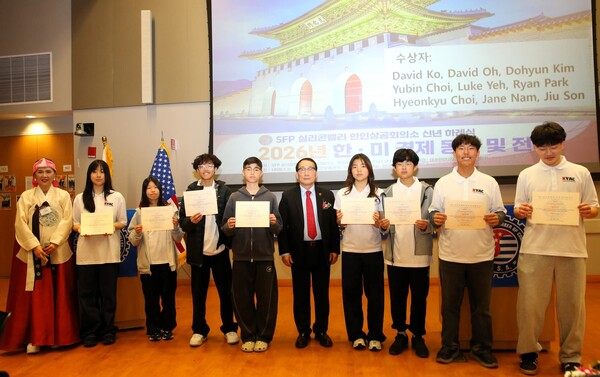
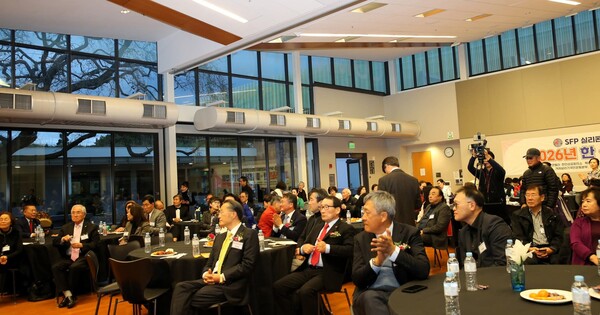
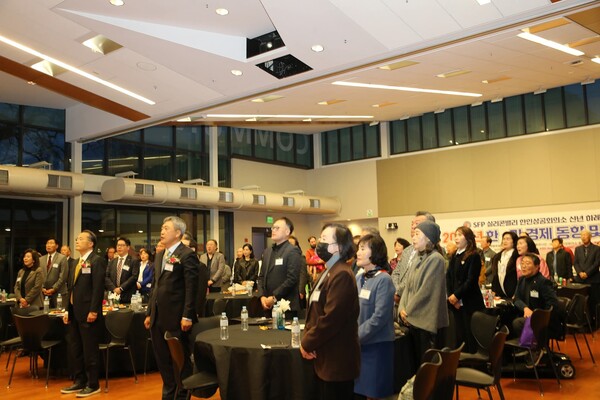
The Silicon Valley Korean American Chamber of Commerce (SFP), led by President Seung-deok Jung, held a New Year reception on Feb. 14 at 5 p.m., along with celebratory performances and an economic seminar titled “2026 Korea–U.S. Economic Trends and Outlook.” The event assessed the realities facing Korean businesses and economic organizations while sharing future strategies.
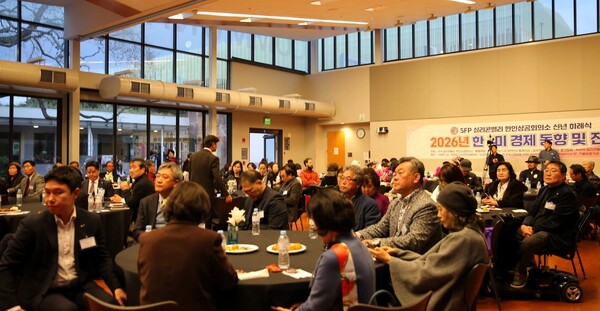
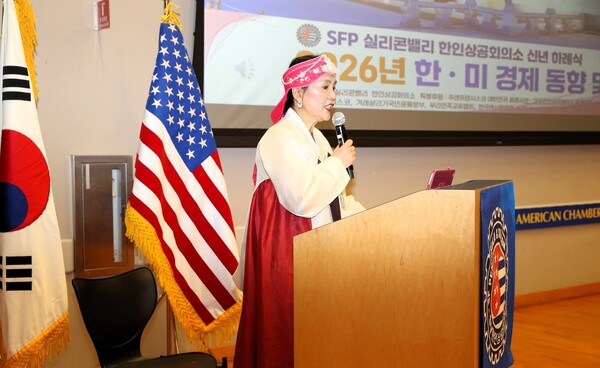
The event, hosted by Secretary General Eun-hee Koo, was attended by approximately 150 Korean American business leaders, organization heads, and community members from the Silicon Valley region. It was held in the Palo Alto Room at the Mitchell Park Community Center.
Participants began the event with a New Year reception, exchanging greetings and well-wishes such as “Wishing you many blessings for the Lunar New Year,” reaffirming their commitment to cooperation in the year ahead.
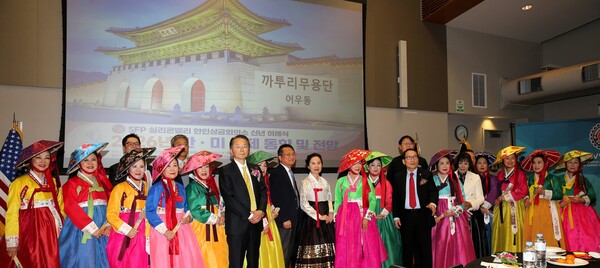
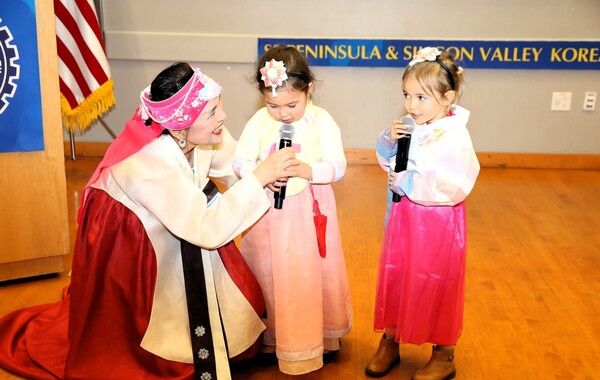
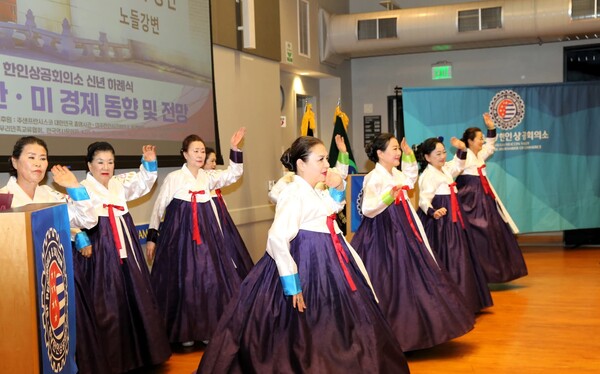
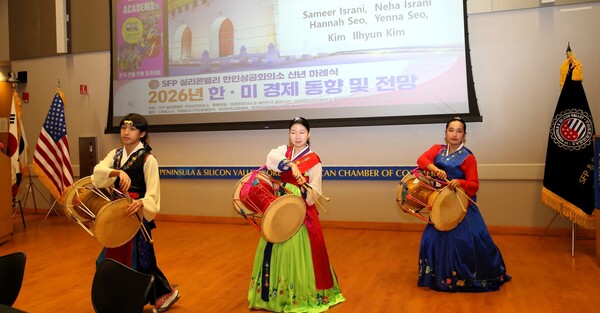
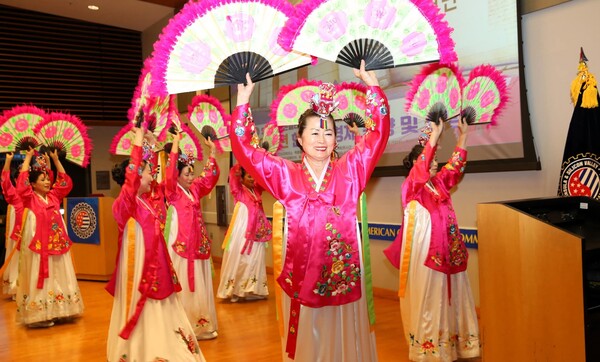
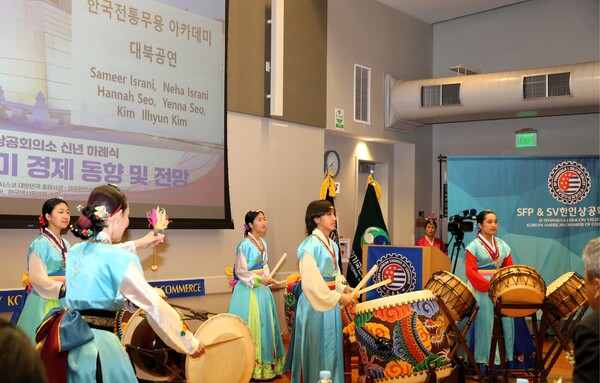
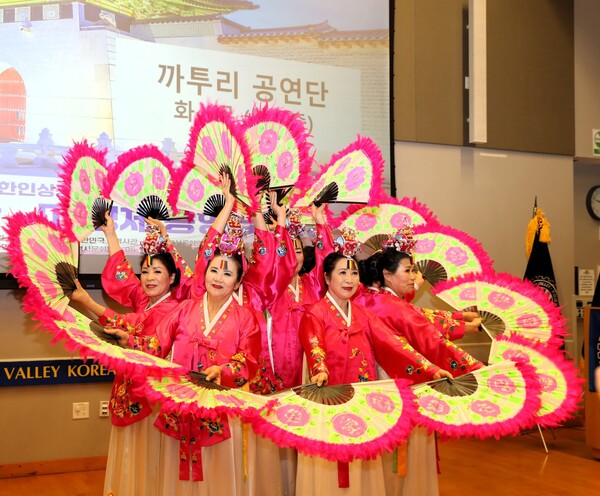
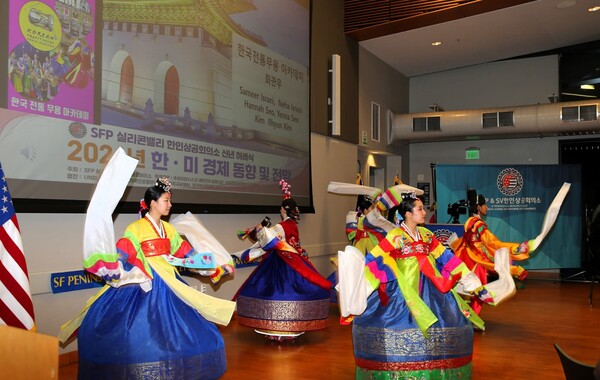
Pre-event performances featured Lunar New Year children’s songs, rap performances, and traditional Korean dance. This was followed by various traditional performances including Sinawi, Hwagwanmu, and Eou-dong, which elevated the atmosphere with a sense of hope for the new year.
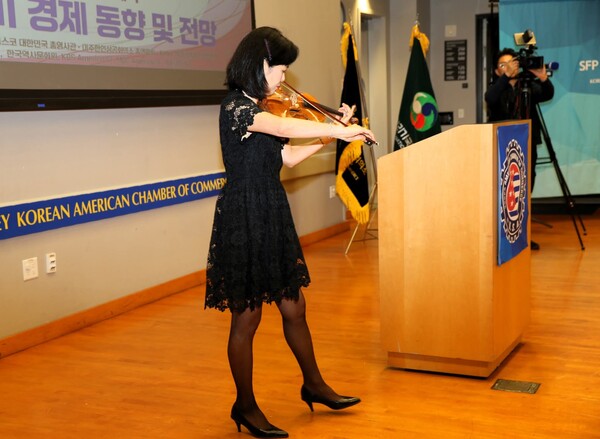
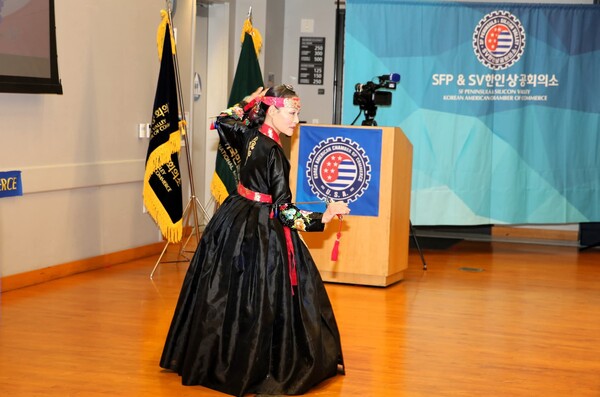
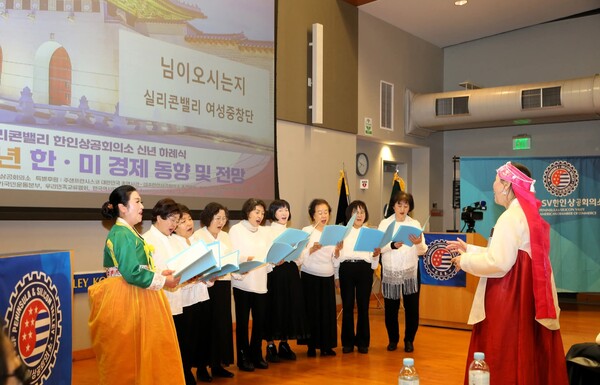
Additional performances included a violin recital by Su-yeon Kim, director of the Kanta Choir; performances by the Kim Il-hyun Dance Company; the Kkaturi Dance Company; the Silicon Valley Women’s Ensemble; Joyful Angels Choral; and Bay Senior Tenor (BST). In particular, the Kkaturi Dance Company received enthusiastic applause for showcasing the elegance of traditional Korean dance.
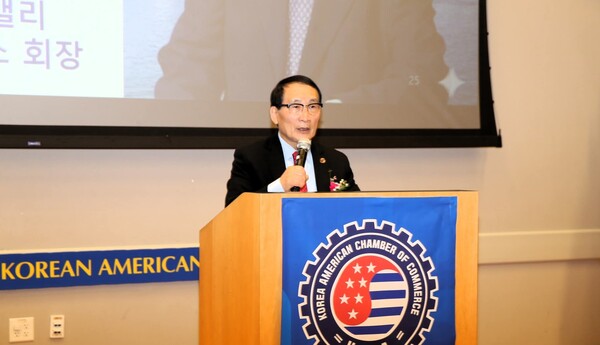
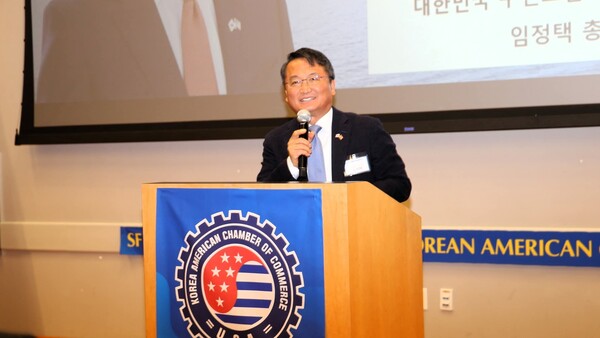
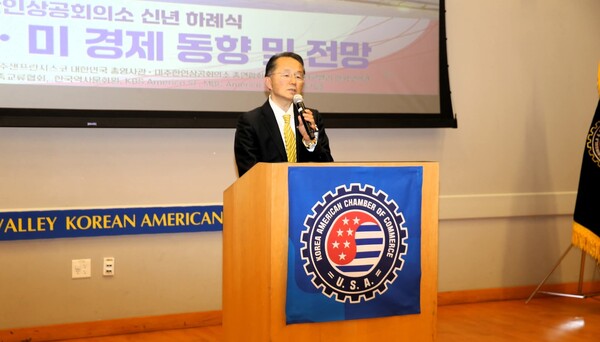
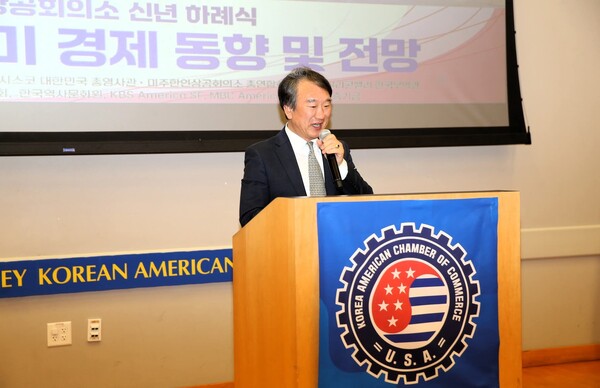
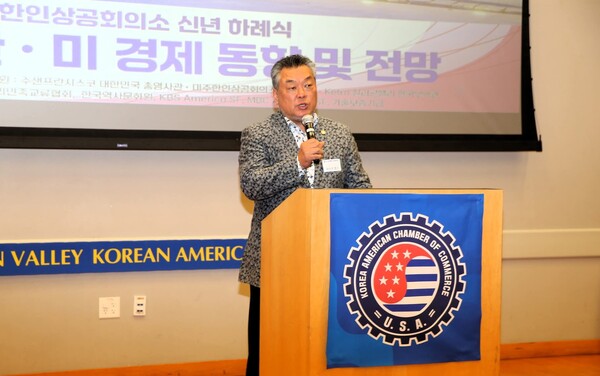
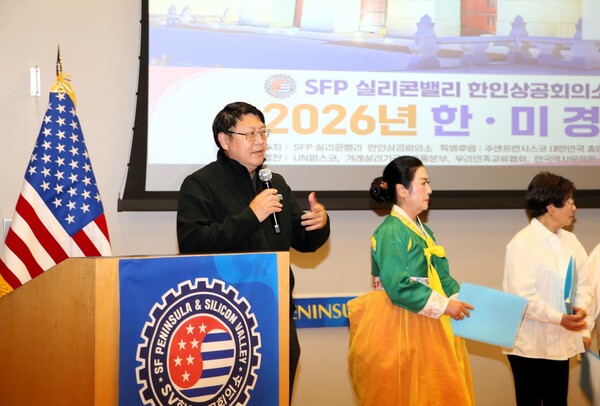
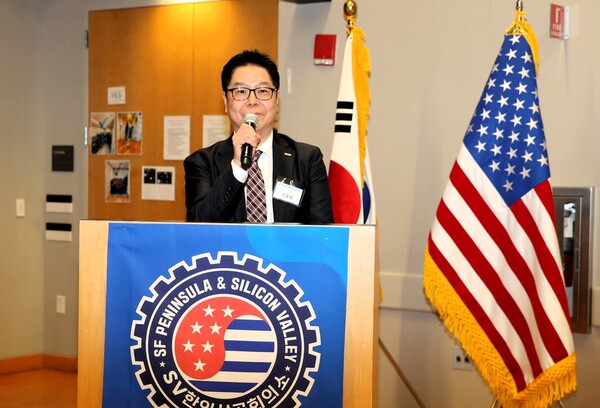
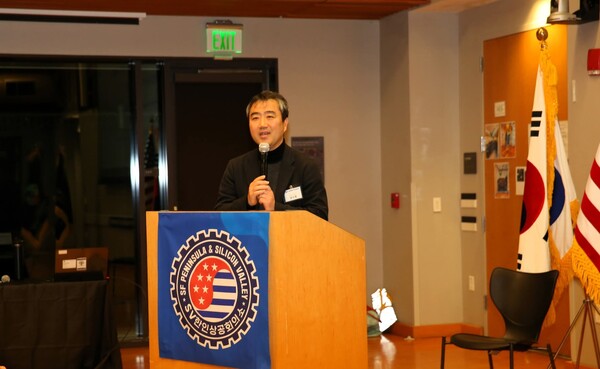
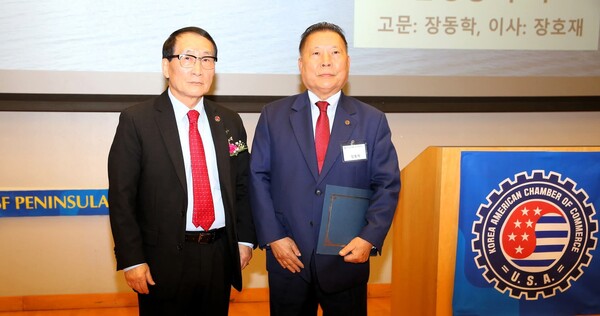
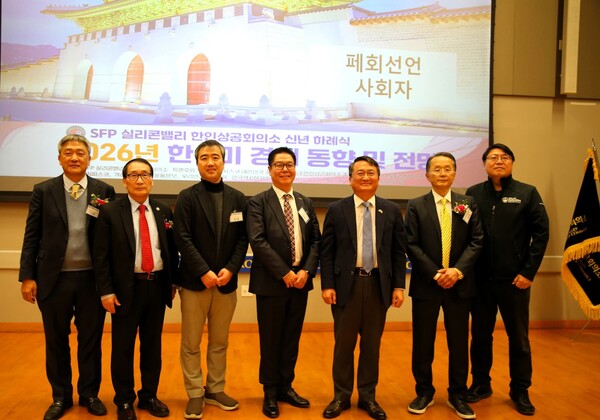
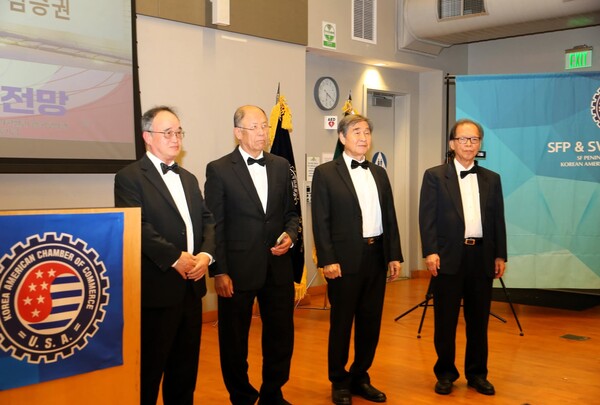
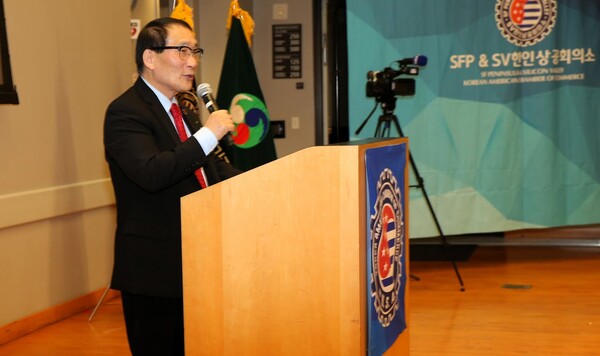
The event opened with welcoming remarks by President Seung-deok Jung, followed by congratulatory speeches from Han-il Kim, president of the San Francisco & Bay Area Korean Association; Dong-ok Woo, president of the Silicon Valley Korean Association; Chang-ik Choi, president of the Silicon Valley Sports Association; and Santa Clara City Councilmember Kevin Park.
The first keynote speaker, Lim Jung-taek, Consul General of the Republic of Korea in San Francisco, emphasized that “California, particularly the San Francisco Bay Area, is not merely a U.S. market but the frontline where change is occurring most rapidly.”
Lim noted that recent international trade conditions, including reciprocal tariffs, have created unfavorable circumstances for businesses. He stated that diplomatic authorities are maintaining close communication with Korean American economic organizations and are preparing follow-up measures to strengthen trade capabilities.
Regarding overseas expansion and investment, he advised a cautious approach, calling for a “progress-based” strategy grounded in phased investment and feasibility reviews, urging businesses to respond prudently and capture opportunities amid change.
Next, Oh-hyung Kwon, head of KOTRA Silicon Valley, assessed that the global economy is transitioning from an era of high growth to a phase of structural low growth.
Kwon noted that compared to 20 to 30 years ago, the technology gap between Korea and China has significantly narrowed. Nevertheless, he highlighted key achievements in 2025, including contributing to record-high exports, expanding foreign direct investment, responding to tariff challenges, and strengthening economic security.
He also introduced major initiatives planned for 2026, including JPM-linked K-Bio partnering, an 82 Startup Summit promotional pavilion, marketing support linked to DesignCon, the Korea Pavilion at RSAC (Moscone Center), a Seattle talent recruitment IR session, and K-Mobility Superconnect at the Computer History Museum. He projected that technological and investment cooperation between Korea and Silicon Valley would continue to expand.
The final presenter, Jong-hyuk Lee, head of the Americas Regional Headquarters of the Korea Technology Finance Corporation (KOTEC), outlined the new government’s industrial policy direction, identifying key goals such as elevating Korea to the world’s second-largest semiconductor powerhouse, entering the ranks of the top four global defense industry leaders, and fostering the bio industry.
Lee emphasized the role of technology finance, explaining the “Death Valley” problem—where companies face funding shortages at the commercialization stage following technology development.
He described this as a gap where neither policy finance nor private finance provides support, resulting in market failure. He said KOTEC is addressing this gap through technology evaluation guarantees, guarantee-linked direct investment, hybrid investment and loan financing, R&D commercialization funding, TCB technology credit loans, and intellectual property finance.
Lee encouraged technology-based companies, stating, “The key is ensuring that companies with strong technological capabilities can receive support even if they lack sufficient capital.”
Participants evaluated the seminar as more than a simple information session, noting that it served as an opportunity to explore directions for cooperation between Korea and overseas markets to strengthen coexistence and competitiveness.


Source: US KNews
https://www.us-knews.com/news/articleView.html?idxno=3786